About Korean Independence Day (광복절 Gwangbokjeol)

Updated: 32 minutes ago
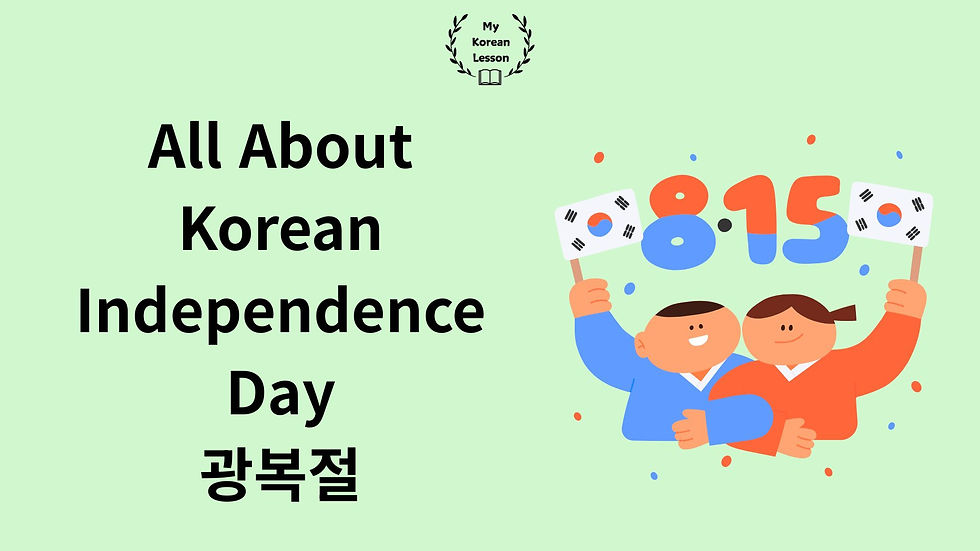
Every year on August 15, South Korea celebrates Gwangbokjeol (광복절), also known as Korean Independence Day. The name literally means “Restoration of Light Day” and marks Korea’s liberation from Japanese colonial rule in 1945. If you're learning Korean or interested in Korean culture, this is an important holiday to know about because it offers a glimpse into Korea’s history, national identity, and values.
1. What Does It Mean?
The word Gwangbok (광복) is made up of:
Korean | Romanization | Meaning |
광 | gwang | light |
복 | bok | restoration, recovery |
절 | jeol | holiday, festival |
So, Gwangbokjeol literally means "The Day the Light Returned", symbolizing the recovery of national sovereignty and freedom.
2. Historical Background
1. Japanese Colonial Period (1910–1945)
Korea was under Japanese occupation for 35 years. During this time, Korean language and culture were suppressed, and many Koreans fought for independence through movements both within the country and abroad.
2. Liberation Day (August 15, 1945)
With Japan’s surrender at the end of World War II, Korea regained its independence. This day marked a new chapter, but also the beginning of challenges such as the division between North and South Korea.
3. Official Holiday Declaration
In 1949, South Korea officially designated August 15 as Gwangbokjeol and made it a national holiday to honor independence activists and remember the struggle for freedom.
3. How Koreans Celebrate Gwangbokjeol
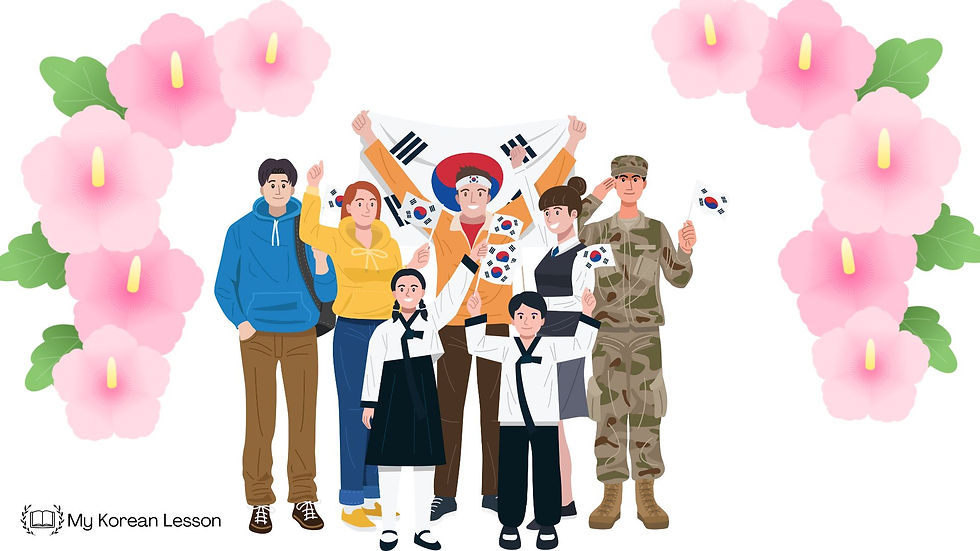
Flag Display (태극기 계양): Koreans proudly hang the national flag (Taegeukgi) outside their homes.
Ceremonies & Speeches: The President and public officials give speeches to honor independence activists.
Cultural Performances: Parades, concerts, and exhibitions highlighting Korean history.
Free Museum Admission: Many historical museums and cultural sites offer free entry.
4. Gwangbokjeol Vocabulary for Korean Learners
If you’re learning Korean, here are some useful words related to this holiday:
Korean | Romanization | Meaning |
광복절 | Gwangbokjeol | Korean Independence Day |
독립 | dongnip | independence |
태극기 | taegeukgi | Korean national flag |
독립운동가 | dongnip undong-ga | independence activist |
해방 | haebang | liberation |
5. Wrap-up: Korean Independence Day
Gwangbokjeol is more than a day off—it’s a reminder of resilience, unity, and hope. Whether you live in Korea or are just learning the language, taking part in the celebrations can deepen your understanding of Korean culture.
If this posting was helpful, please consider a donation to help My Korean Lesson grow! Thank you so much for studying with our website!